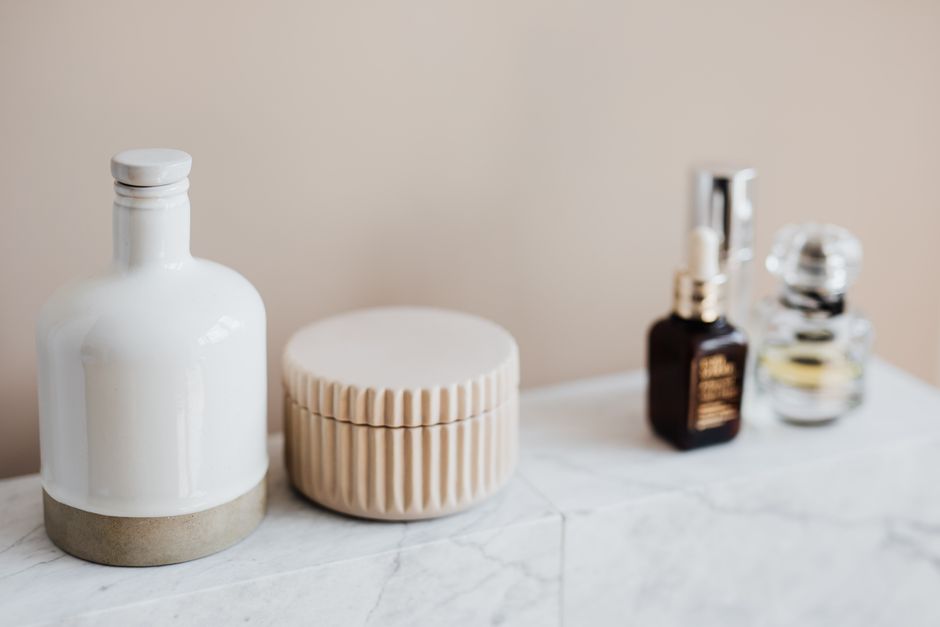
Skincare products do not stay the same forever once the seal is broken. Preservatives, airtight pumps, and cool storage can slow the decline. They cannot freeze a vitamin C serum, a jar of cream you dip fingers into, or a sunscreen that has sat in a hot car. Knowing when to stop using a product is part of a routine, not a special occasion.
This is a practical reading-the-label guide, not a lab assay Sideline Life performed on a shelf of bottles. If your winter routine is already in flux, see how to winterize your skincare regimen. For a less obvious irritation source, how your towel can sabotage your skin is worth a look as well.
Two clocks: the expiration date and the period after opening
Many packaged cosmetics sold in major markets carry either a specific expiration date, a manufacturing or batch code, or a period-after-opening (PAO) symbol: an open jar icon with a number and an M, such as 6M or 12M. That number is the manufacturer’s guide to how long the product is meant to be used after you first open it, assuming normal storage. It is not a dare to finish the bottle on the last day, and it is not a guarantee if the product has been overheated or visibly spoiled.
An unopened product stored in a cool, dark place may last until a printed expiration date, or for a period the maker specifies. Once opened, the PAO is usually the more relevant clock, especially for formulas that oxidize or that you touch with your hands. If there is no obvious date and no PAO symbol, be conservative: note the month you opened it, and be quicker to discard anything used around the eyes, anything water-rich in an open jar, and any sunscreen you rely on for real sun exposure.
What spoilage actually looks and smells like
Throw the product out — do not “mix it until it looks normal” — if you notice:
- A sharp, sour, rancid, or otherwise new smell that was not there when you opened it.
- Color change that points to oxidation or contamination: a vitamin C serum gone dark amber, a white cream that has turned yellow or gray, or streaks of unexpected color.
- Texture changes: curdling, watery separation that will not recombine with a gentle roll, unexpected grittiness, or mold-like spots.
- Irritation that starts after you have used the same product comfortably for months, especially stinging, watering eyes, or a sudden rash. Stop first; the product may not be the only cause, but it is a reasonable suspect.
A little separation in some oil blends can be normal if the label tells you to shake. Use the rest of the list, not a single bubble, as the test. When in doubt, especially with sunscreen and eye-area products, discard them. The cost of a replacement is lower than a burned holiday or an eye infection.
| Product type | Why the clock runs faster | A cautious habit |
|---|---|---|
| Sunscreen | Filters and the base can degrade with age and heat; an expired or cooked bottle is a poor sun plan | Do not use a bottle past its expiration; replace one that lived in a hot car; apply a fresh product for a high-exposure trip |
| Vitamin C and other unstable antioxidants | They oxidize with air, light, and heat; color and smell often change first | Store tightly closed, away from a sunny windowsill; discard when the formula is clearly darker or off |
| Open jars and cream tubs | Fingers add water and microbes each time you dip | Use a clean spatula if you can; be quicker to retire a jar than a pump of the same type |
| Eye-area products and anything used on broken skin | The margin for contamination is smaller | Shorter use windows; no “finishing the tube” after visible change or eye irritation |
| Mascara and liquid eyeliner | Repeated contact near the eye, and a wand that goes back into the tube | Many people replace these on a short cycle (often around three months); do not water them down to stretch a dry tube |
Storage that actually helps
Keep products tightly closed, out of direct sun, and away from a steamy radiator or a hot windowsill. A consistent room-temperature cabinet is enough for most formulas. A bathroom that swings from shower steam to cold can be harder on packaging and on preservative systems than a bedroom drawer. Refrigeration is only useful when the maker says so; it is not a universal upgrade, and condensation in a cold jar can work against you.
Do not dilute leftover product with water, saliva, or a splash of toner to “revive” it. You add contamination and you change the formula. Do not combine the last of two different batches in one jar to save a little product.
Sideline Life verdict
Read the expiration date and the period-after-opening symbol, write down when you opened a bottle if the packaging is unclear, and trust obvious changes in smell, color, or texture. Be strictest with sunscreen, eye products, and open jars. Store products cool, closed, and out of the sun, and do not stretch a changed formula because a little remains. A shorter, fresher routine is safer than a crowded shelf of almost-finished bottles you no longer trust.
FAQ
Can I use a moisturizer a few months after the PAO date if it looks fine?
A closed, clean pump that looks and smells normal is a lower risk than an open jar, but the PAO is there for a reason. If the product is inexpensive, replace it. If it is a prescription or a product used on compromised skin, ask a pharmacist or clinician rather than extending it by guesswork.
Does an unopened serum last longer in the fridge?
Cool, dark storage can help some unstable formulas, but only follow refrigeration when it does not conflict with the label. Freezing is not a strategy. An unopened bottle still has a useful life; check any printed date.
How do I remember when I opened something?
A small label with the month and year on the bottom of the bottle is enough. You do not need an app. The habit matters most for sunscreen and for anything near the eyes.